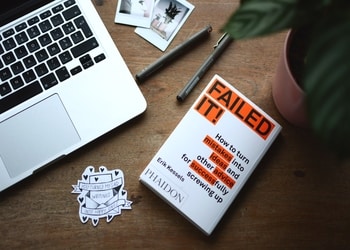
THE POLITICS OF GETTING PUBLISHED
By Anisa Pinatih
Lately, the world feels like it’s spinning in every direction at once: wars, budget cuts, AI races, and endless political unrest. It’s chaotic. And yet in the quieter corners of academia, things seem unchanged: research still has to be written in a certain kind of English, published in certain kinds of journals, and follow certain kinds of rules. But if we look closer, between citations and peer reviews, the geopolitics seeps in.

An old friend asked me how I could possibly run a business without these platforms. To him, my refusal to participate in the algorithm makes no sense. But this question actually proves a deeper point about power and control.
The truth is, when you sell linguistic services, you don’t just sell words. The value doesn’t vanish when AI can string a sentence together, because, like other services, language work also sells time and convenience.
From time to time, we receive inquiries like: “I need to publish in a reputable journal. How long will it take after I submit my manuscript to you?” This reflects a common misunderstanding about the nature of our work.
Lately, the world feels like it’s spinning in every direction at once. And yet in the quieter corners of academia, things seem unchanged: research still has to be written in a certain kind of English.
Eduedit turned three last month, or seven, if we count from 2018. We’ve been here longer than AI, longer than Grammarly. We’ve seen the full spectrum, from handcrafted articles painstakingly revised to LLM-generated drafts.
We’ve talked about ChatGPT’s love affair with “delve into” and “leverage”. But even when you swap those overused words, AI text can still feel off. Why? Syntax. Or as we like to call it: the secret sauce of sentence structure.
Even though technology has advanced, the process can still take months—or even over a year—before a researcher’s hard work sees the light of day. But thanks to artificial intelligence (AI), things are changing.
Understanding the differences between a thesis and a journal article is crucial for graduate students transitioning from academic writing to publishing. This post provides steps to tailor a thesis for a journal submission.
ChatGPT can sometimes fall into the trap of using overly complex language and jargon. Here are some telltale signs a text might have been penned by ChatGPT and some tips to overcome its shortcomings.
Why do we need human editors if we’ve already had ChatGPT, Trinka.ai, and other AI-powered tools doing all the work? For starters, to uphold ethical considerations and minimize the potential for bias in AI systems.
It’s been four years since the last blog update. What has happened all this time? A lot, but what’s probably worth highlighting is that Eduedit was shortlisted as a grand finalist at the 5ME2045 LPDP Business Competition 2023.
Many returning scholars are now becoming ‘academic influencers’, motivating young people to follow the ‘sky is the limit’ motto and believe that anything, just about anything, is possible.
If you hear a foreigner speaking Indonesian in a medhok accent, it may be funny at first, but when it doesn’t stop after an utterance or two, and the person is actually attempting to sound Javanese, then you will wonder why.
Studying abroad leaves memories that will last for a lifetime. The academic culture improves your critical thinking and you gain technical knowledge, but what’s more important is that you will learn to be honest with yourself.
I’m Rachel. I don’t have linguistics or TESOL degree. I’m writing to counterbalance Miss Anisa because, let’s be honest, no one is aiming for 8.5. Some of us only need the minimum 6.5.
Some of my students are now living their dreams in Europe and other parts of the world. They sent me a thank you email for editing their motivation letters.
I received 8.5 for my speaking skills in all three IELTS tests I’ve taken. Sounds like a brag I know, but bear with me. The first, I think is a beginner's luck.
There’s a popular idea in academia that if you’re going to publish, it should be in a top-tier journal. Go big or go home, they say.That might work if you’re an established scholar.
My experience publishing my MSc’s dissertation was formative. I picked a journal with the highest impact and recommended an established member of academia to review my paper.