THE PENDULUM ALWAYS SWINGS BACK
22 April 2025
By Anisa Pinatih
Eduedit turned three last month, or seven, if we count from 2018. We’ve been here longer than AI, longer than Grammarly. We’ve seen the full spectrum, from handcrafted articles painstakingly revised to LLM-generated drafts. We’ve seen the explosion of orders to more than 200%. We’ve seen both good times and quiet stretches.
And now, the question lingers: Will we still be here in the age of AI?
To answer, I’ll borrow the defiant tone of Victor Gao’s response to claims about China losing market share due to US tariffs: "We’ve been here for seven years, and we survived... and we expect to survive for another seven."
Except—imagine that delivered with slightly less confidence. With a rising inflection, like a question. Because let’s be honest, I’m not 100% sure.
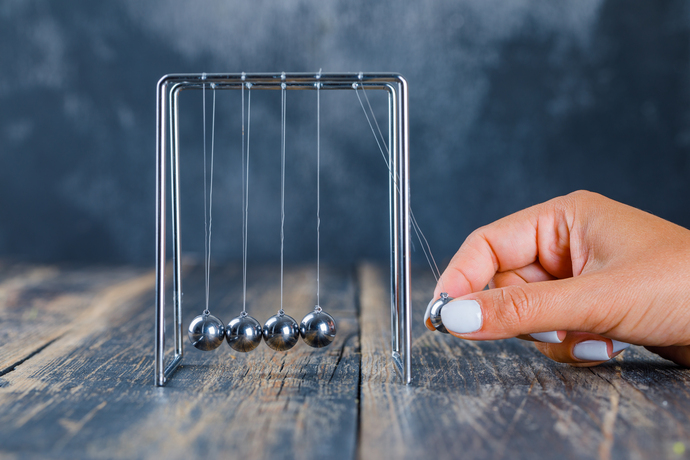
That said, what I am certain about is that the pendulum always swings back.
Remember when screens first became ubiquitous? We marveled at having the world in our pockets. Then came the backlash: digital detoxes, screen-time limits, and kids need to be playing outside again.
That's where we're heading with AI writing. Right now, we're in the honeymoon phase: journals flooded with ChatGPT-polished papers and researchers outsourcing their drafting, editing, perhaps even thinking to bots.
But sooner or later, though I don’t know how many years, we'll hit the tipping point.
When every paper sounds the same sterile, "perfect" AI voice, academia will rediscover the value of human cadence, the rhythm of real thoughts, and small imperfections that signal authentic work.
It has happened, and it will happen again. When industrialized food dominated with cheap, uniform, and mass-produced products, the antidote was the rise of artisanal bakeries, organic produce, and slow-food movements with the imperfect, locally sourced ingredients.
When fast fashion flooded the market with disposable, algorithmically designed trends, the swing back was the explosion of sustainable choices, thrift culture, upcycling, and small-batch designers.
With that in mind, we'll likely to survive.
Not from denial, but because we know technology's role–and its limits. Besides, markets always segment: between fast food and farm-to-table, between mass production and handmade quality. Academic writing is no different.
And there are no hard lines between the choices. We know how it goes. Some days, the words feel like they’re writing themselves—like the article might actually lead to something Nobel-worthy. Other days? It’s pure BKD (beban kerja dosen), and people are just trying to get words on the page before the deadline.
One of our authors put it perfectly: “I miss writing articles I’m proud of, not just articles that check boxes.”
That’s the push-and-pull of academic work. And when one is ready to swing back toward writing that actually feels like theirs, not just what’s fastest or easiest, we’re here to help.
So here we are at year seven.
Still the stubborn little organic farm of academic editing in an age of synthetic text. Still that breath of fresh air when everyone else is glued to their AI writing assistants.
To our authors since 2018, our journal partners, and everyone who still believe in human words: thank you. We are here to stay.

