ON AGENCY AND STRUCTURE (AND SUPERSTRUCTURE)
"Social structures are both the medium and outcome of human agency." Anthony Giddens
23 December 2025
By Anisa Pinatih
The digital presence of this business is currently stuck between "I’m here" and "I don't want to be here." The Instagram posts stopped a while ago; the LinkedIn mirroring followed suit. Facebook is a graveyard by now, and X is just a placeholder with nothing to see. The only update is through this blog, and its frequency relies entirely on my occasional sparks of inspiration.
But we have all heard the same advice: if you are not on social media, your business does not exist. A few weeks ago, an old friend asked me how I could possibly run a business without these platforms. To him, my refusal to participate in the algorithm makes no sense. But his question actually proves a deeper point about power, control, and why stepping away is my attempt to stay human.
I wanted to explain this, but it would have required three pages of an essay and a matcha latte for my last two brain cells. So, replying to the message on WhatsApp, I typed a normative answer. And now that I have the time and space, allow me to write that lengthy reply.
The buildings we are trapped in
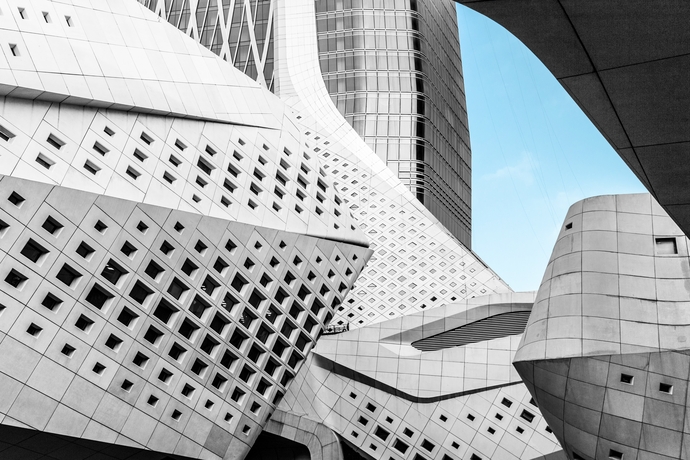
Think of society as a collection of buildings. Some call this the base and the superstructure. To put it simply, the former is the foundation: the economy and the tools we use to produce things. The latter is everything built on top of it: our culture, laws, politics, and our very thoughts. Today, the base is no longer just factories, but also server farms owned by Big Tech. The superstructure includes the algorithm that dictates what we see and how we should act to be successful.
When my friend asked that question, he was speaking from inside that building. He could not imagine a world where the foundation is not owned by tech corporations. It’s almost like it’s easier to imagine the end of the world than the end of social media. But I am just a guest, if not a ghost, in that building. It is a lively place with lots of tenants, and everyone is expected to be there. I pop in occasionally just to be seen. Besides, it can be fun because you’ll meet someone you know, and there are plenty of things you’ll find amusing.
But I live in another building entirely. Here, the means of production are not determined by an algorithm. I do not need to be constantly visible to sustain operations. And that’s because the way humans organize the economy shapes the way of thinking and the rules and regulations (and vice versa). If we live in my friend’s building, where the base is made of, among other things, Meta, X, and TikTok, then the rules will always emphasize visibility, engagement, and virality. Over there, a business would crumble without them.
This building of mine, the foundation is built on a much older, sturdier material: human connection, not fiber-optic cables and engagement metrics. My relations of production are direct. I don’t need a digital middleman to tell my clients that I am reliable. In my lucky case, they tell each other, and all I need to do is maintain a steady reputation. But this old-fashioned word-of-mouth is apparently radical in this digital age, as you go against the current of having to be constantly visible and to be the most viral.
I then concluded that my friend’s confusion stems from mistaking the platform for the market. He thinks the building of Big Tech is the only place where trade happens. But the real market is, and always has been, human need and your ability to fulfil it. As long as you have this, you have a business. It may not be as fancy, but you can avoid the "rent" that everyone else is paying, such as data and the constant anxiety of staying relevant. You only need to be relevant to the people you deal with in real life, like in the pre-Internet era.
But let’s not feel morally superior here. My building is still a building, no matter how much nicer I make it sound. Different foundation and structure has different walls and limits. My handshakes, for example, can only go so far. I will not reach the scalability of those with millions of following. Also, even in my world of reputation and word-of-mouth, I am still a participant in the material system. I still have to produce, still live in the same superblock, and I am still, in many ways, a proletariat in the grander machine of the 21st century.
On Agency and Structure
For some others, the base–superstructure model above is often seen as overly deterministic. The following is another simplification, but for the sake of argument, let's treat the combined base–superstructure as the social structure. Within this social structure lies your agency.
The economic rules and cultural norms limit your choices, but you have your ability to make choices and, in some cases, create your own. Some thinkers argue that structure is so powerful that agency is mostly an illusion. Others insist we are never just puppets; we are the master architects instead. The more convincing position, at least to me, sits somewhere in between: the system shapes us, but it only survives because we keep participating in it.
That’s where I locate myself, not here nor there. No one is really outside the structure, but you can be slightly angled against it. Stepping away from certain tools is not to render them irrelevant. My conviction is that using them, uncritically, feels like a slow-but-deadly erosion of something human.
This difference in perspective became more apparent when my friend told me he uses AI to talk through his anxiety about the state of the world: wars, politics, and uncertainty. It probably helps him cope. I am not trivializing the issue. But for me, that particular way of using AI is precisely the problem.
When we prompt, we are doing more than using a tool. We are producing value. Our attention, language, preferences, and even hesitation become raw material. The platform processes it, optimizes it, and sells it back as a service. We consume, yes—but we also produce. For free. Labor without wages, disguised as leisure.
Now, this is where things get uncomfortable. Algorithms are not just algorithms. Economically, they’re part of the means of production. Culturally, they nudge, repeat, and reward certain things. Over time, they shape what feels normal, interesting, or worth responding to. Some scholars also talk about this algorithmic state apparatus, where authority once spoke through teachers or religious leaders, it now operates through visibility and silence. Behaviours that align with the system are amplified. Others are quietly buried.
Under such conditions, we may then lose authenticity because it is now just part of the performance. Then, the question is, do I make a difference by withholding participation? Not really. It’s not that the system will collapse without me. But opting out, even partially, is the only way I know to assert agency.
So, when my friend asked me how a business could survive without these platforms, he wasn't being an antrepreneur police or anything. I believe it was a genuine concern, as in: do I actually survive without "visibility"? The problem is that he’s looking at the structure as it exists, while I’m looking at what participation costs. Growth comes with dependency. Refusal comes with hassle, such as finding the alternative routes. I’m just choosing my compromises. Besides, large following doesn't always translate into a large conversion rate, does it?
Some things are not up for scaling
In essence, by leaning on human relationships, I’ve reclaimed how I work. My clients are the people I know, talk to, and build trust with over time. Nothing about that scales particularly well, but that’s okay. It’s almost like owning an artisanal bakery or, as I called it multiple times in my previous blog posts, a proudly organic farm, where we don't have to display performative productivity or success.
That’s exactly the point, to be honest: not having to perform and, more importantly, not being separated from your work, its meaning, and from each other. The digital world intensifies that distance. You become a data point; your reputation is a commodity stored and ranked somewhere else, on a platform you don't own. That may work well for big businesses but for a smol one like mine, reputation is social capital built slowly, one handshake at a time, but clients stay for a long time.
Am I romanticising the past? Maybe. Nostalgia often arises in response to the alienation, fragmentation, and loss of meaning in the modern world. But I’m not refusing technology either. I'm still on social media. I’m familiar with most AI tools out there for writing, and even tested them one by one. It’s just that, cliche but, you have to stay true to yourself, even when it comes with a hefty price, such as the so-called "slow growth". And I haven't even talked about the environmental concerns here, an argument for another essay. And oh the echo chamber!
There’s also another layer to this that I don’t always say out loud. This way of working has shaped how I understand faith. Not submitting to demand on my attention, productivity, and worth has been quite liberating. Freedom, as it turned out, lies in submitting to what truly matters. And what is it that matters more than clout and valuation? Many, and for me, for the past few years, it's my religiosity and how to order my work and life around that commitment. Because some things, however promising or profitable they might be, are not up for scaling.
THAT is the answer I didn’t know how to give then, as I need to first introduce the building metaphor, dial down critical theory, and explain digital sovereignty without sounding like a madman.
A little caveat though, no one knows what the future holds, as POV can shift, things may change, so, although highly improbable, it's not impossible that I run a business with more digital visibility one day. Until then, I'll stick with blogging.
